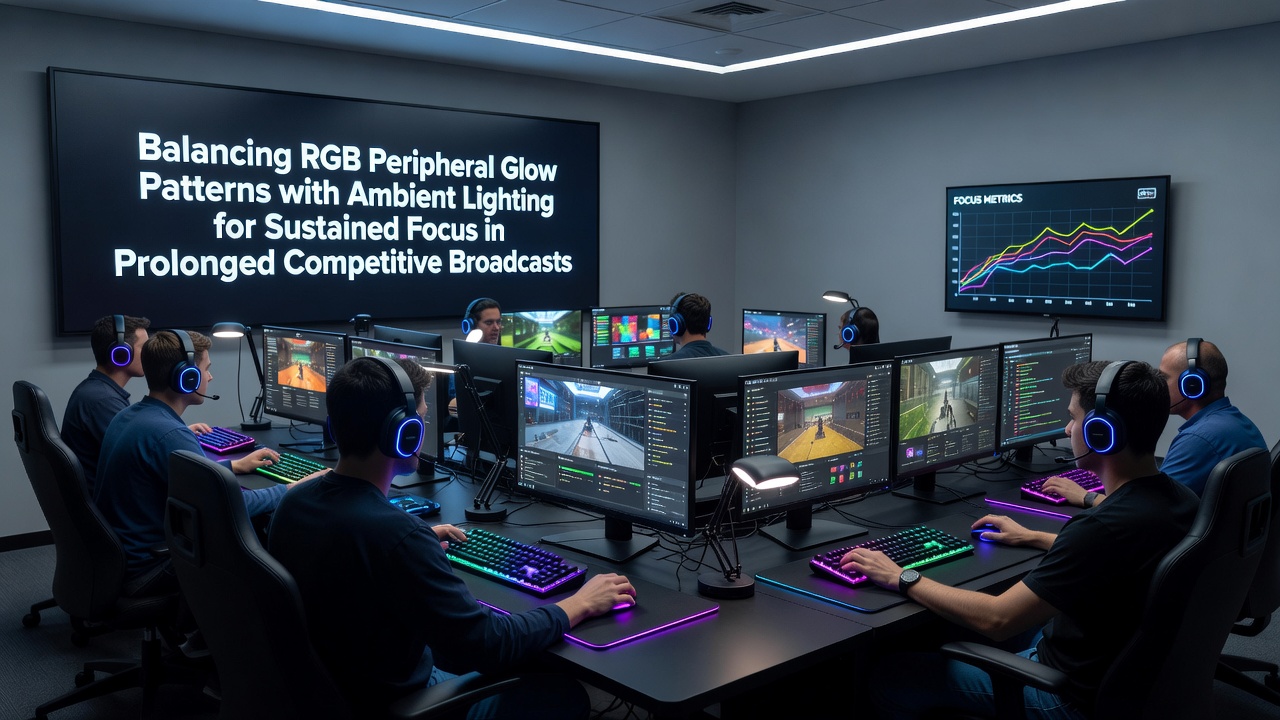
Balancing RGB Peripheral Glow Patterns with Ambient Lighting for Sustained Focus in Prolonged Competitive Broadcasts
Competitive broadcasts in October 2026 continue to push hardware setups toward longer sessions where peripheral lighting plays a direct role in maintaining visual consistency. Observers note that RGB patterns on keyboards, mice, and headsets often interact with room illumination in ways that either support or disrupt sustained attention, and researchers have tracked these interactions through controlled lighting studies in extended performance environments.
Core Principles of Light Interaction in Broadcast Setups
RGB glow from peripherals creates localized color points that shift in intensity and hue while ambient sources fill the broader visual field, and the balance between these layers determines how the eye processes contrast during rapid on-screen action. Studies on visual ergonomics show that mismatched color temperatures can increase eye strain over multi-hour periods, whereas coordinated setups reduce the need for constant pupil adjustment. Those who calibrate both systems together report steadier fixation on monitors without the distraction of flickering edges or overly saturated peripheral hues.
Measuring Impact on Focus During Extended Play
Data collected from competitive environments indicates that unbalanced RGB output often competes with ambient lighting for attention, leading to measurable drops in reaction consistency after the first ninety minutes. A report from the Australian Institute of Health and Safety outlines how task lighting standards recommend keeping background illumination between 300 and 500 lux while limiting saturated color bursts from devices to under 20 percent of total field brightness. When these thresholds align, participants maintain steadier performance metrics across sessions that stretch past four hours.
Hardware manufacturers have responded with software that allows real-time adjustment of RGB cycles based on room sensor input, and broadcast teams integrate these tools to prevent sudden shifts that break concentration. One case involved a team that synced keyboard breathing patterns to a gradual ambient dimming schedule, resulting in fewer reported visual fatigue incidents during peak tournament windows.
Practical Calibration Methods Used in Professional Environments
Technicians begin by establishing baseline ambient levels with neutral white sources positioned behind monitors, then layer RGB profiles that complement rather than dominate those values. Profiles often cycle through cooler tones during high-intensity segments and warmer ones during transitions, while ambient fixtures remain fixed to avoid introducing new variables. Observers note that gradual transitions in peripheral glow patterns prevent the startle response sometimes triggered by abrupt color changes.
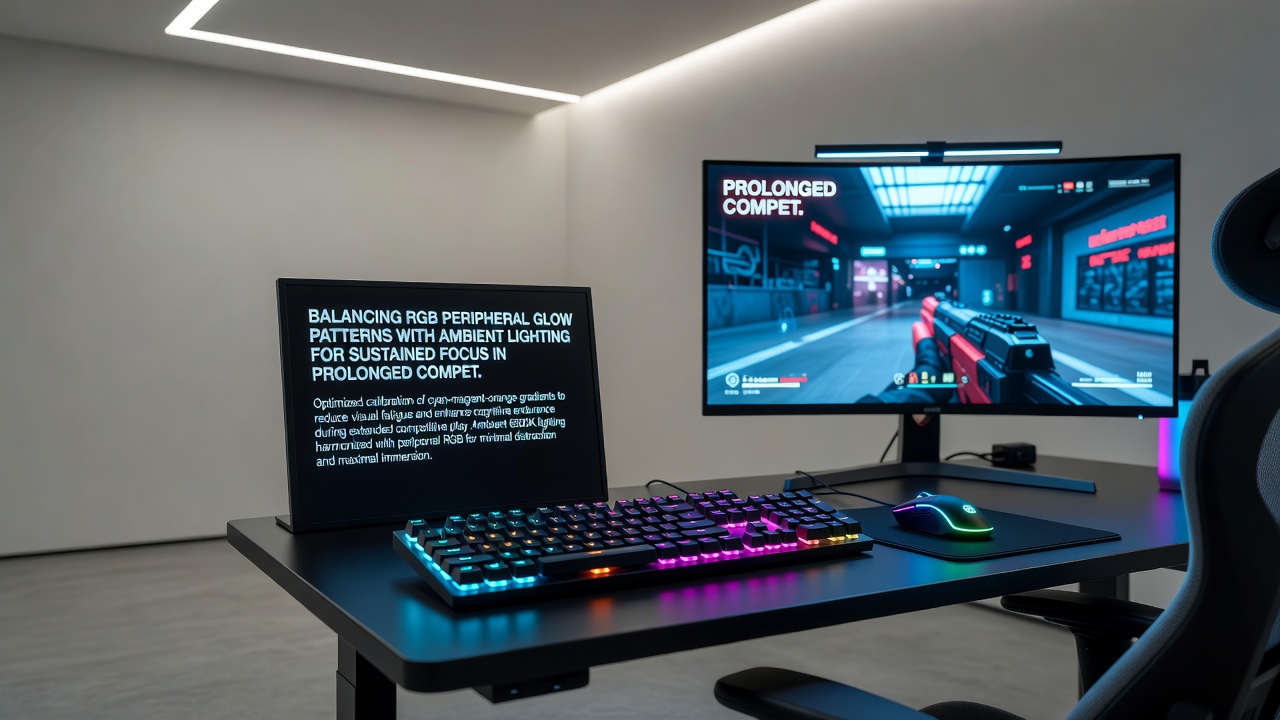
Software suites from major peripheral brands now include ambient light sensors that automatically scale RGB intensity, and integration with broadcast control software allows these adjustments to occur without manual intervention during live segments. Research indicates that consistent application of these automated systems correlates with improved retention of fine motor control in prolonged competitive scenarios.
Equipment Choices That Support Coordinated Lighting
Keyboards and mice featuring individually addressable LEDs allow precise zoning that matches the color temperature of overhead or bias lighting, whereas single-zone devices limit flexibility and often require manual overrides. Monitors with built-in bias lighting further reduce the contrast gap between screen and surroundings, and many teams pair these with RGB strips mounted behind desks to create a continuous light plane. Data from lighting research groups shows that setups using layered sources experience fewer reports of visual discomfort compared with single-source configurations.
Power management also factors into the equation because constant high-brightness RGB output can generate heat that affects component stability over long broadcasts, and teams monitor thermal loads while maintaining the desired glow levels. Calibration routines performed before each session verify that ambient and peripheral sources remain within target ratios even as room conditions shift slightly throughout the day.
Integration With Broadcast Workflows in Late 2026
Production teams increasingly embed lighting control into the same dashboards used for camera switching and overlay timing, allowing a single operator to maintain both visual and technical consistency. Protocols developed by industry associations emphasize testing light balance under actual broadcast conditions rather than static lab settings, because audience viewing environments differ from the studio space. Figures from equipment usage surveys reveal that coordinated lighting setups appear more frequently in top-tier events where session lengths exceed standard tournament formats.
Those managing multiple competitor stations must account for individual hardware preferences while keeping overall room illumination uniform, and modular RGB control systems make it possible to adjust zones independently without affecting the shared ambient layer. This approach supports focus across varied play styles and hardware configurations.
Conclusion
Effective management of RGB peripheral patterns alongside ambient sources rests on measurable calibration practices and sensor-driven automation that adapt to session demands. Teams that apply these methods consistently document steadier performance indicators across extended competitive broadcasts, and ongoing refinements in hardware integration continue to support those outcomes in 2026 environments.